
Description
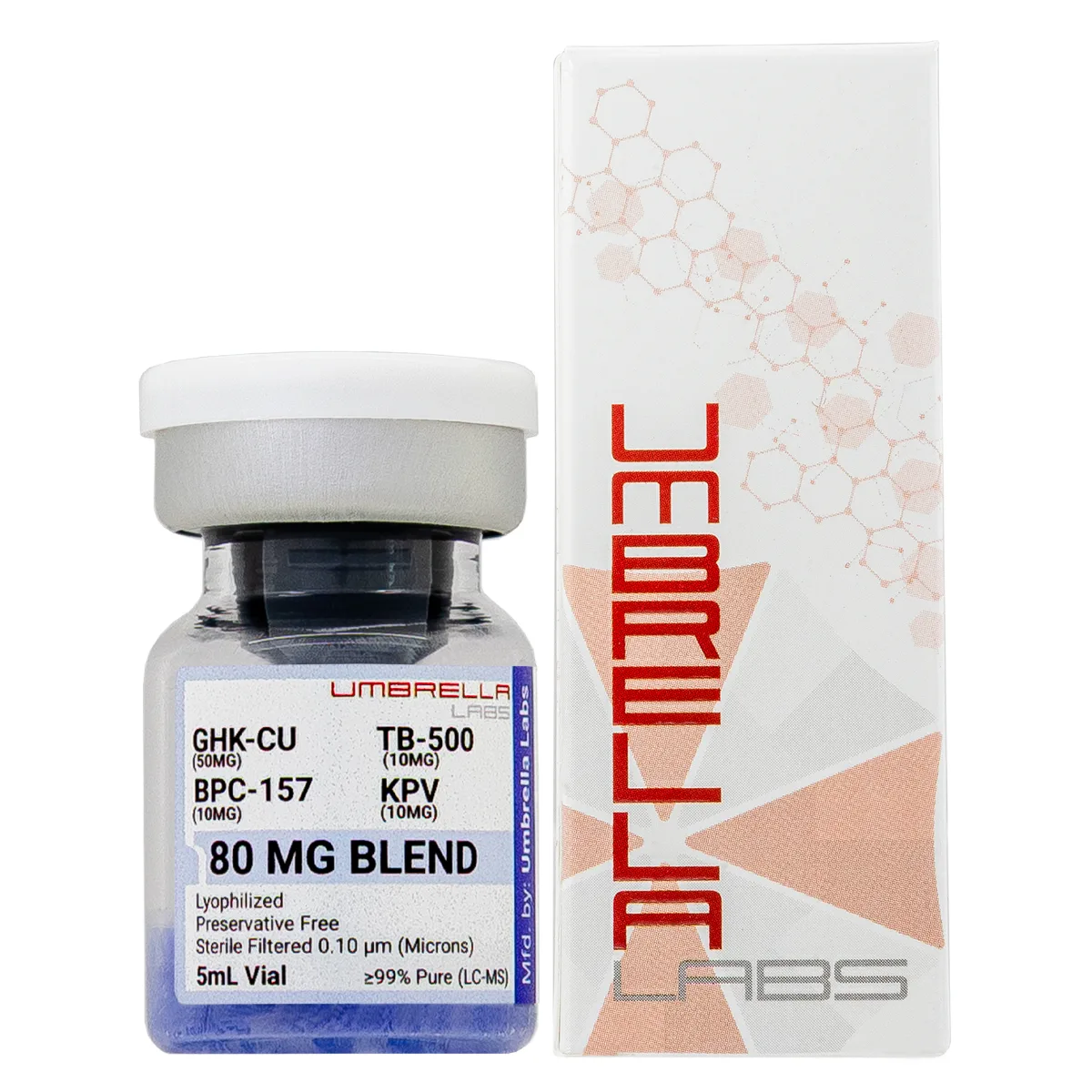
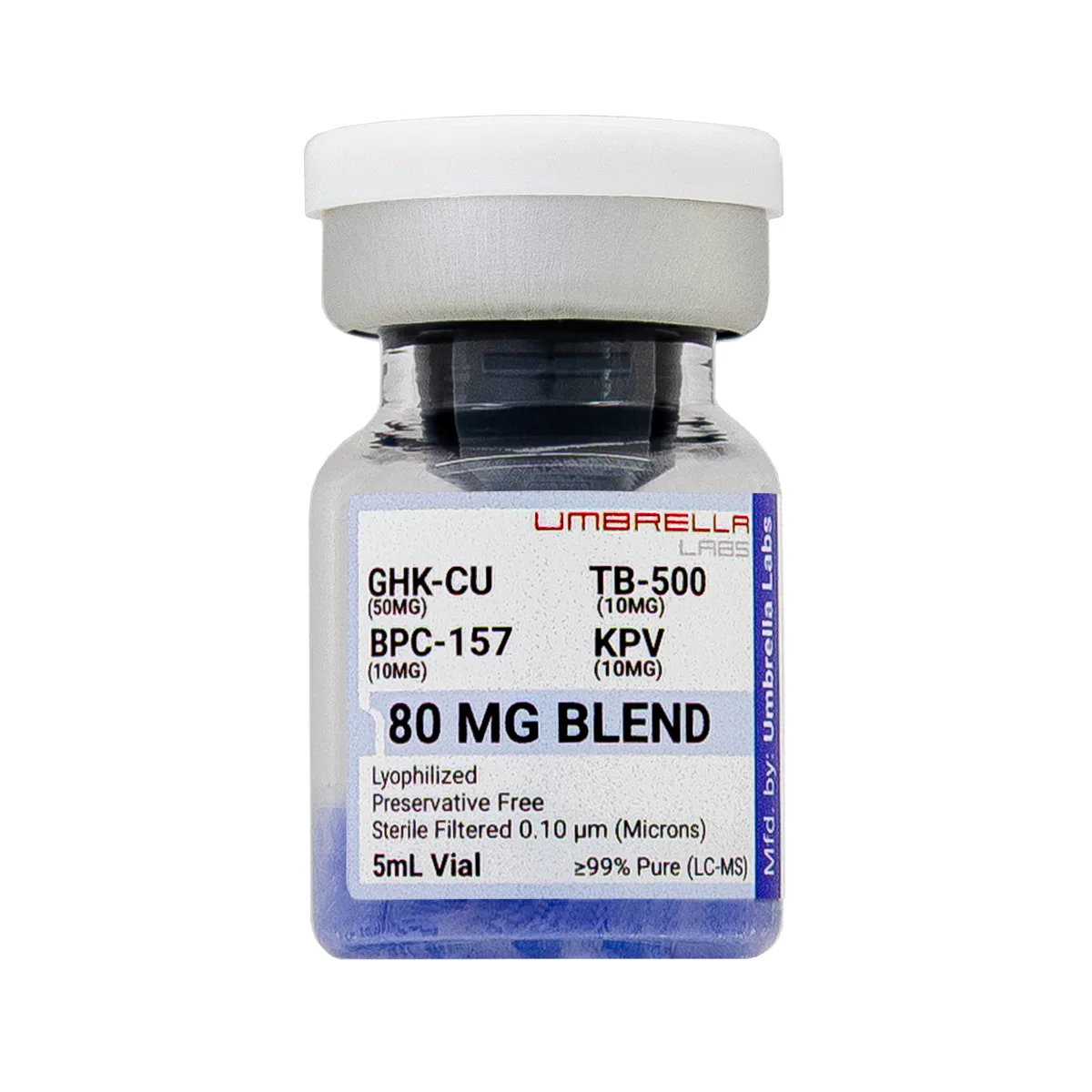
With this GHK-Cu, TB-500, BPC-157 and KPV peptide blend you get GHK-Cu, TB-500, BPC-157 and KPV blend as freeze-dried powder in a sealed vial. Each batch is tested by LC-MS to 99% purity or higher. It’s $129.99. It’s sold for laboratory research only.
Browse the rest of our peptide blends for related compounds.
What’s in the GHK-Cu, TB-500, BPC-157 and KPV blend?
GHK-Cu is the tripeptide glycyl-histidyl-lysine bound to a copper ion. GHK occurs naturally in human plasma, saliva and urine, and its levels fall with age.
Thymosin beta-4 is a 43-amino-acid protein found in nearly every cell, where it binds actin and helps control cell movement. TB-500 is the name used for synthetic thymosin beta-4 and for a short fragment of its active region.
BPC-157 is a 15-amino-acid peptide based on a fragment of body protection compound, a protein first found in gastric juice. It’s one of the most widely studied research peptides, almost entirely in rodents.
KPV is the tripeptide lysine-proline-valine, the C-terminal end of alpha-melanocyte stimulating hormone. It keeps alpha-MSH’s anti-inflammatory activity without the pigment effects.
GHK-Cu, TB-500, BPC-157 and KPV peptide blend specifications
- Contains: GHK-Cu, TB-500, BPC-157 and KPV
- Purity: 99% or higher, tested by LC-MS
- Amount: 80mg
- Form: Lyophilized powder blend in one sealed vial
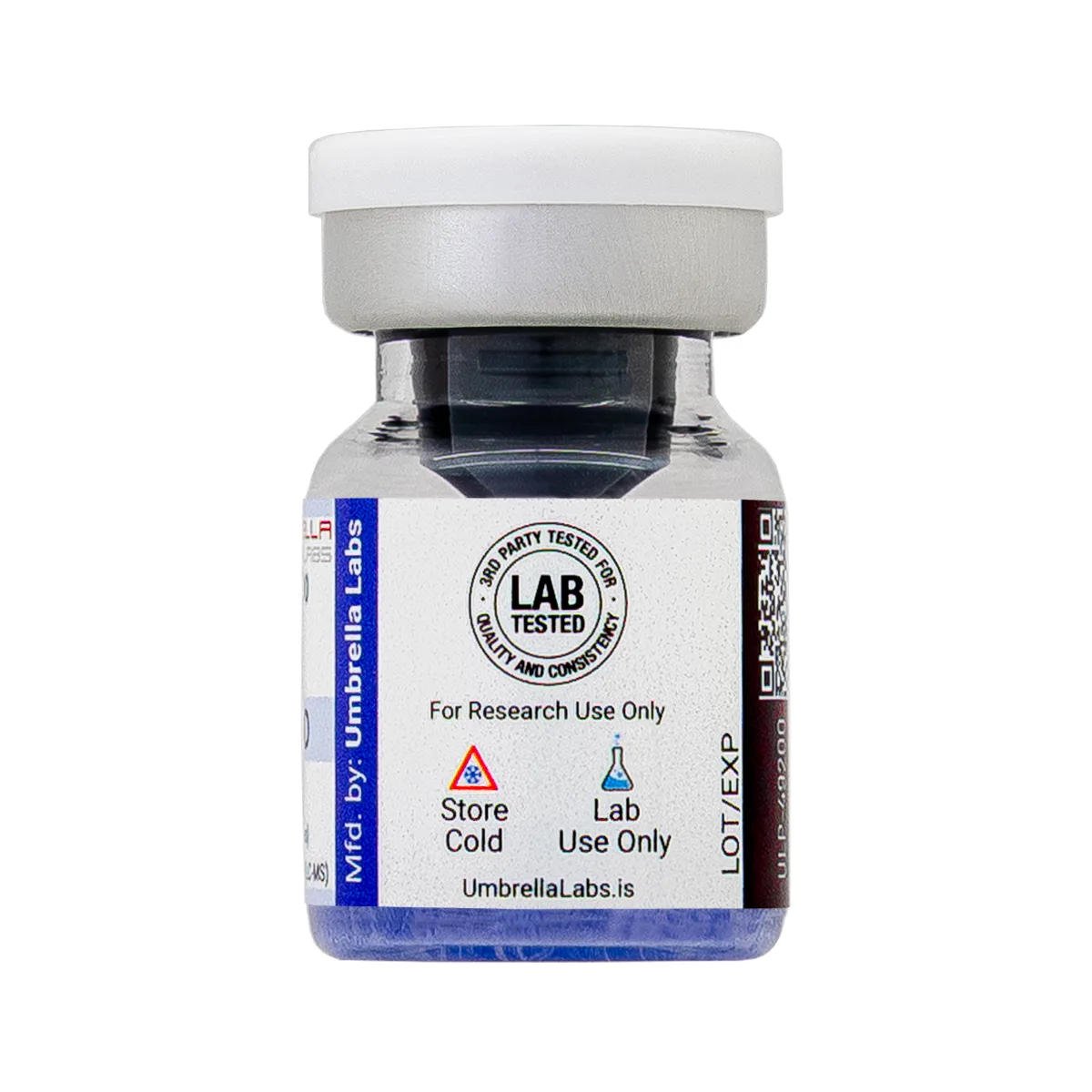
- Storage: Keep it in the fridge at 2 to 8°C and don’t freeze it
- Use: laboratory research only, not for human or veterinary use
Research behind the GHK-Cu, TB-500, BPC-157 and KPV blend
Loren Pickart, who first isolated GHK in 1973, has published reviews of its effects on collagen synthesis, wound contraction and gene expression in cell and animal studies.
Goldstein and colleagues reviewed thymosin beta-4’s role in wound repair in 2012, covering faster closure of skin wounds and new blood vessel growth in animal models.
Most of the work comes from Predrag Sikiric’s group at the University of Zagreb. Their rodent studies report faster healing of tendon, ligament, muscle and gut injuries, and Mikus and colleagues described improved burn wound healing in mice.
Dalmasso and colleagues reported in Gastroenterology (2008) that KPV reduced inflammation in mouse colitis models and was taken up through PepT1.
There are no published studies on this exact combination. The research above is on each compound alone, and you can read it on PubMed.
How to mix a GHK-Cu, TB-500, BPC-157 and KPV blend vial
The point of a blend is convenience and consistency. Everything is in one vial at a set ratio, so there’s one reconstitution and no risk of mixing up separate vials.
GHK-Cu, TB-500, BPC-157 and KPV blend arrives as a freeze-dried (lyophilized) powder in a sealed glass vial. It has to be dissolved before use, and for most peptides that means bacteriostatic water. Let the water run slowly down the inside wall of the vial, then swirl gently until the solution is clear. Don’t shake it.
The amount of water you add sets the concentration. For example, adding 2mL of bacteriostatic water to a 80mg vial gives 40mg per mL. Write the volume and the date on the label so anyone picking up the vial later knows what’s in it.
We sell bacteriostatic water in 30mL vials, and acetic acid solution for the few peptides that don’t dissolve well in water.
Purity testing for GHK-Cu, TB-500, BPC-157 and KPV blend
Every batch of GHK-Cu, TB-500, BPC-157 and KPV blend is checked with liquid chromatography-mass spectrometry (LC-MS) before it goes on sale. LC-MS separates a sample into its parts and identifies each one by mass, so it confirms what the compound is and how much of the sample it makes up. The current batch tested at 99% or higher.
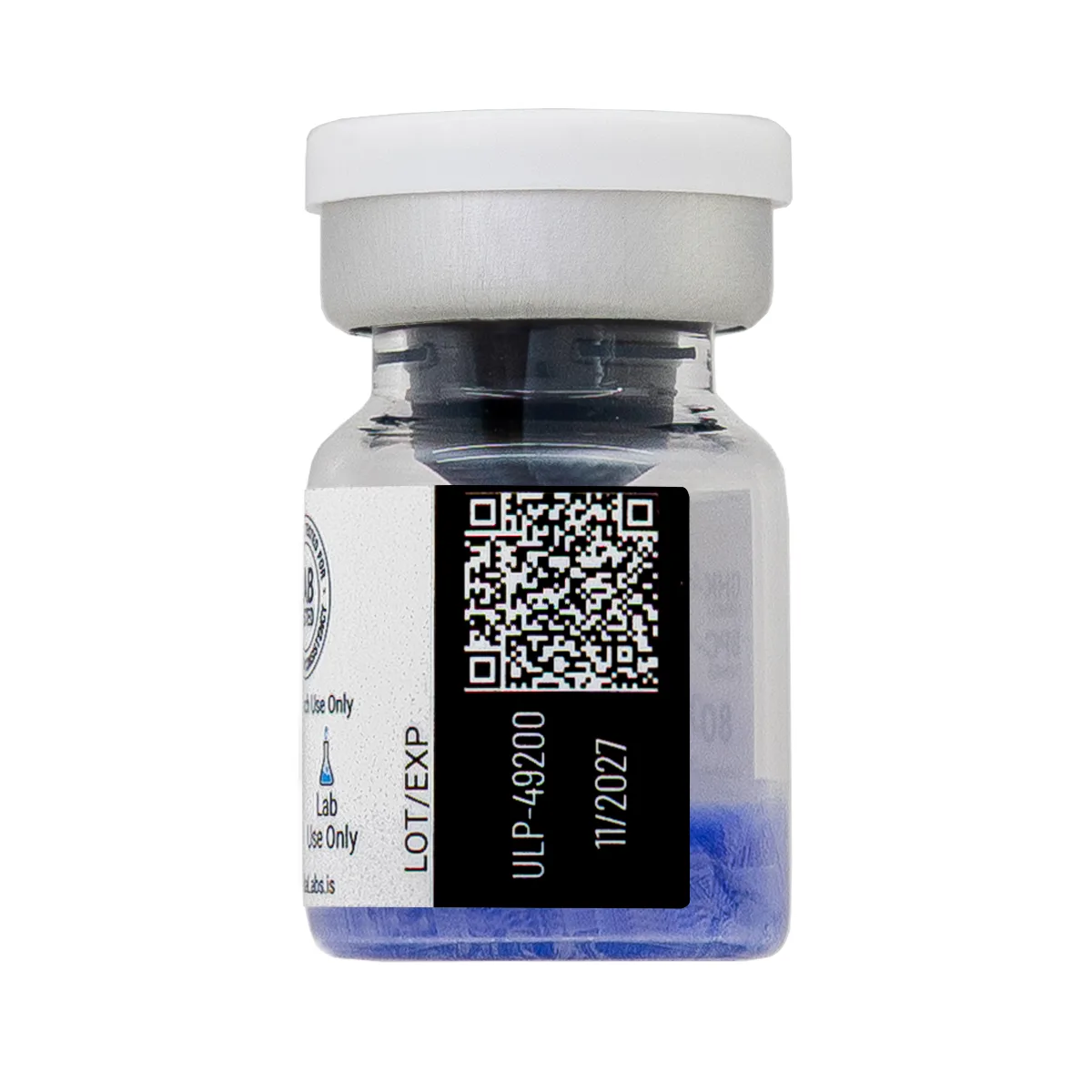
Small differences between batches are normal, so write the batch number from the label into your records. If something looks wrong when your order arrives, like discoloured powder or a cloudy solution, set it aside and don’t use it.
Storage and handling
Keep it in the fridge at 2 to 8°C and don’t freeze it. Once mixed, keep the vial in the fridge and use it within a few weeks. Unmixed vials keep much longer, so only reconstitute what you need. Label anything you decant with the compound, amount and date, and keep it out of reach of children and pets.
Common questions about the GHK-Cu, TB-500, BPC-157 and KPV peptide blend
Does GHK-Cu, TB-500, BPC-157 and KPV blend come with water to mix it?
No. The vial holds only the freeze-dried powder. Add bacteriostatic water to your order if you don’t already have some.
How long does mixed GHK-Cu, TB-500, BPC-157 and KPV blend last?
Kept in the fridge, most reconstituted peptides are good for a few weeks. Unmixed vials last much longer, especially in the fridge or freezer.
Is the GHK-Cu, TB-500, BPC-157 and KPV peptide blend in stock?
Yes. Every option on this page is in stock and ready to ship.
Related research peptides
Similar products in this format include GLOW blend (GHK-Cu, FLGR242 and B-complex blend, GLOW Plus blend (GHK-Cu and CJC-1295. Our main Research Peptides page lists everything in the category.
Buy GHK-Cu, TB-500, BPC-157 and KPV peptide blend online
Ordering takes a minute. Add it to your cart and check out. The GHK-Cu, TB-500, BPC-157 and KPV peptide blend is in stock and ready to ship. While you’re here, our lab supplies cover the pipettes, scales and solutions most studies need.
Sold for laboratory research use only. It isn’t for human or veterinary use, and it isn’t a food, drug or cosmetic.



Reviews
There are no reviews yet.